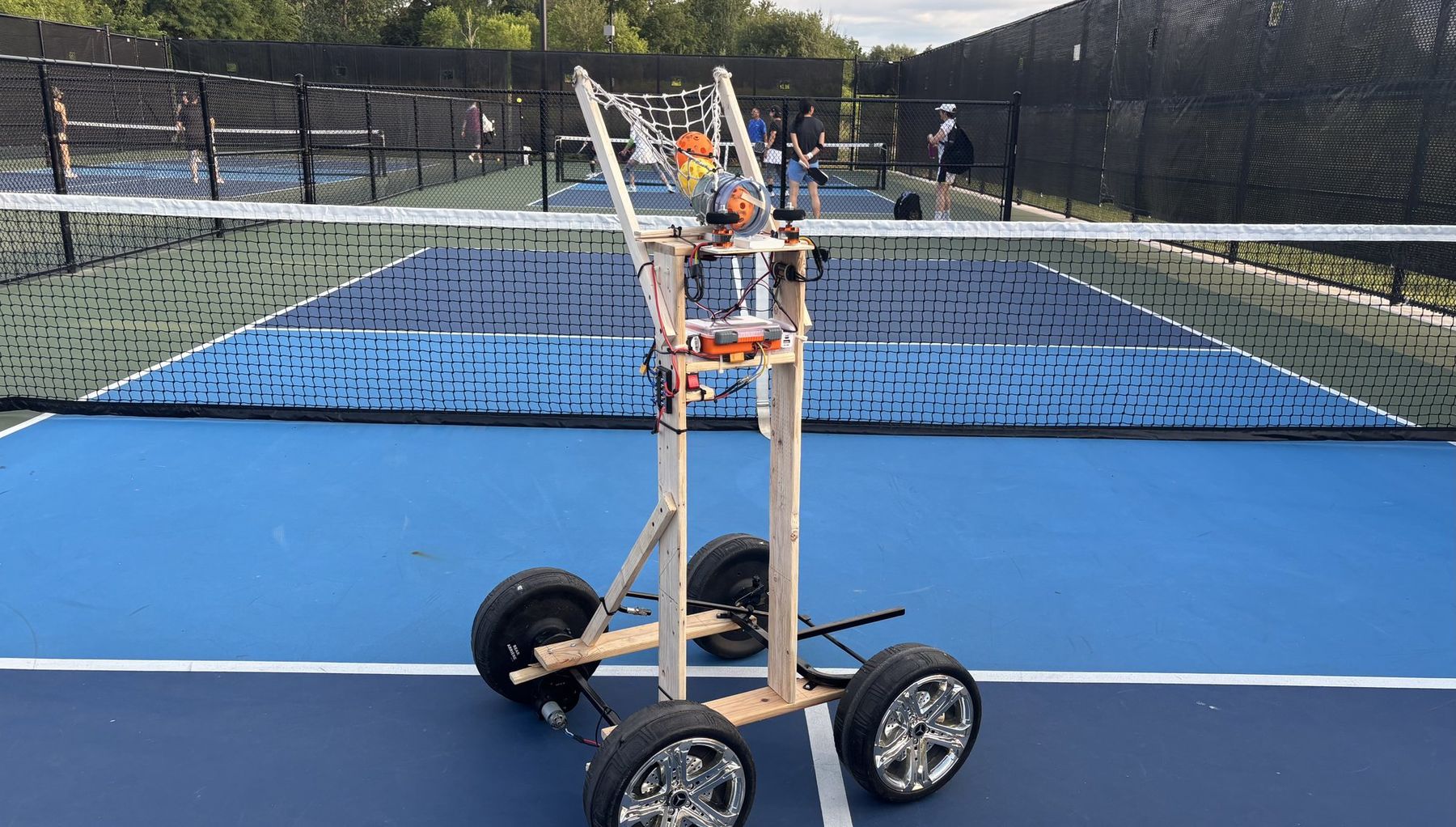
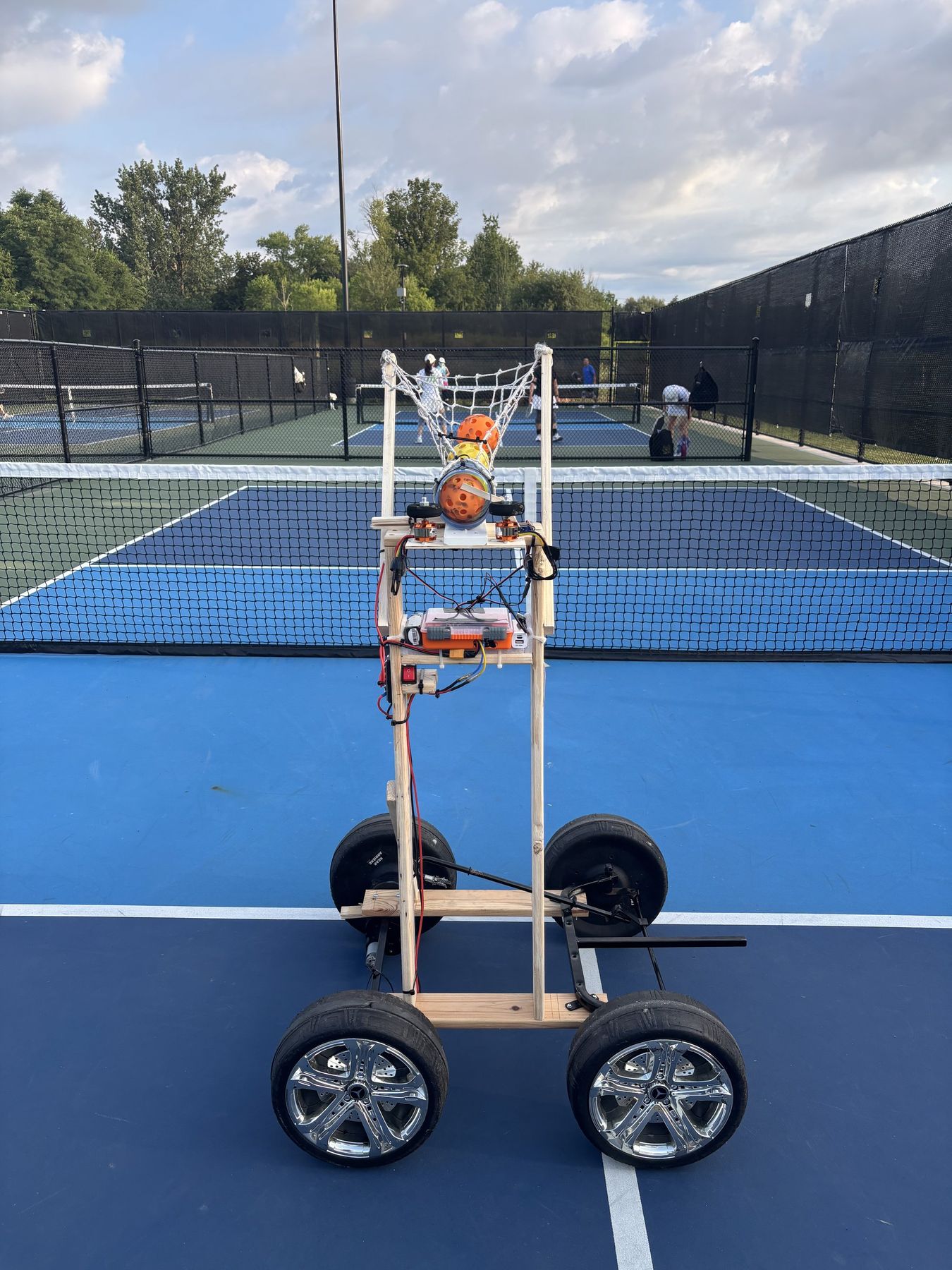
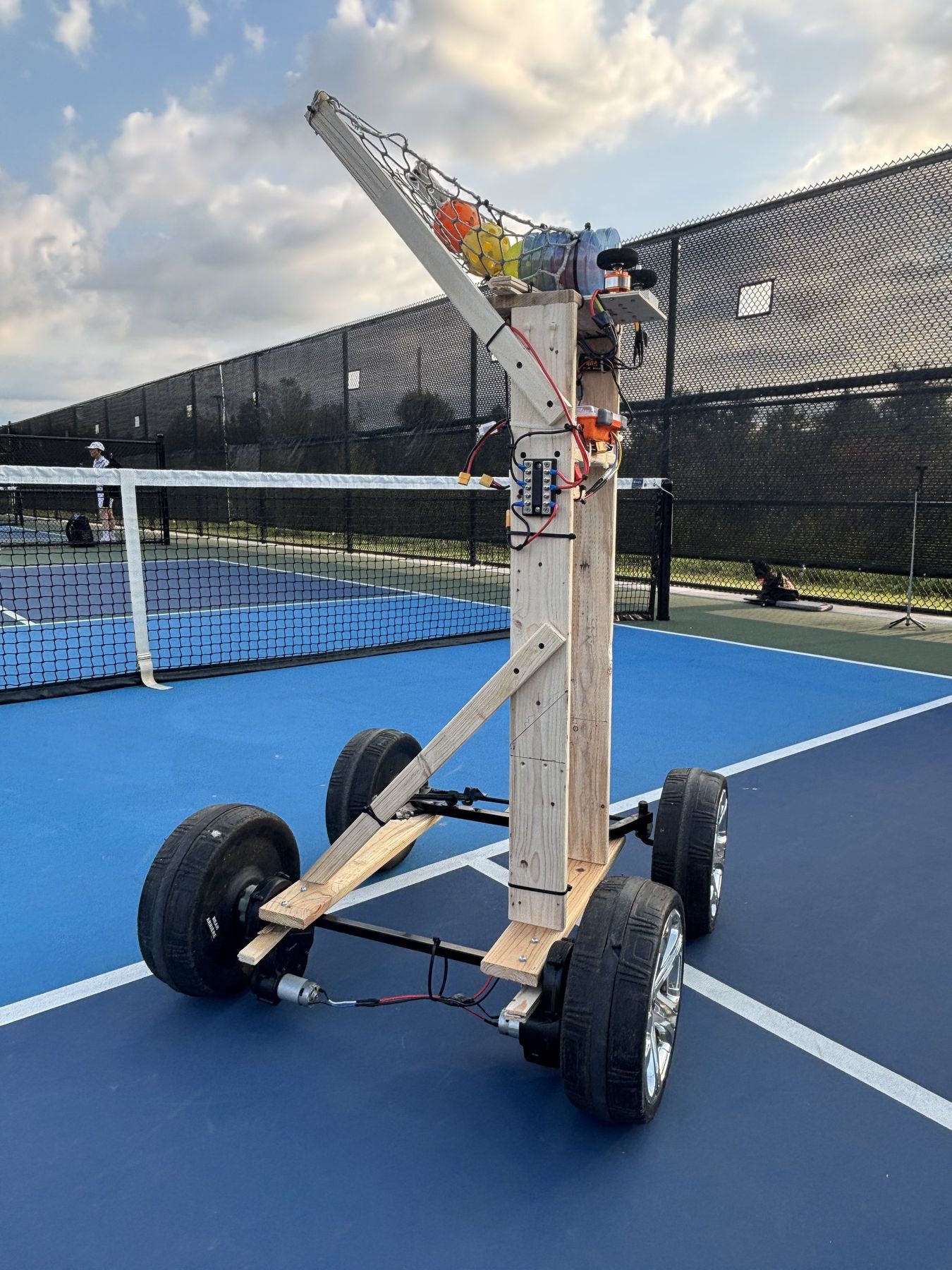
Rebuilt a gutted toy-car chassis (front-steering + rear-drive halves) into a rolling straight-line buggy
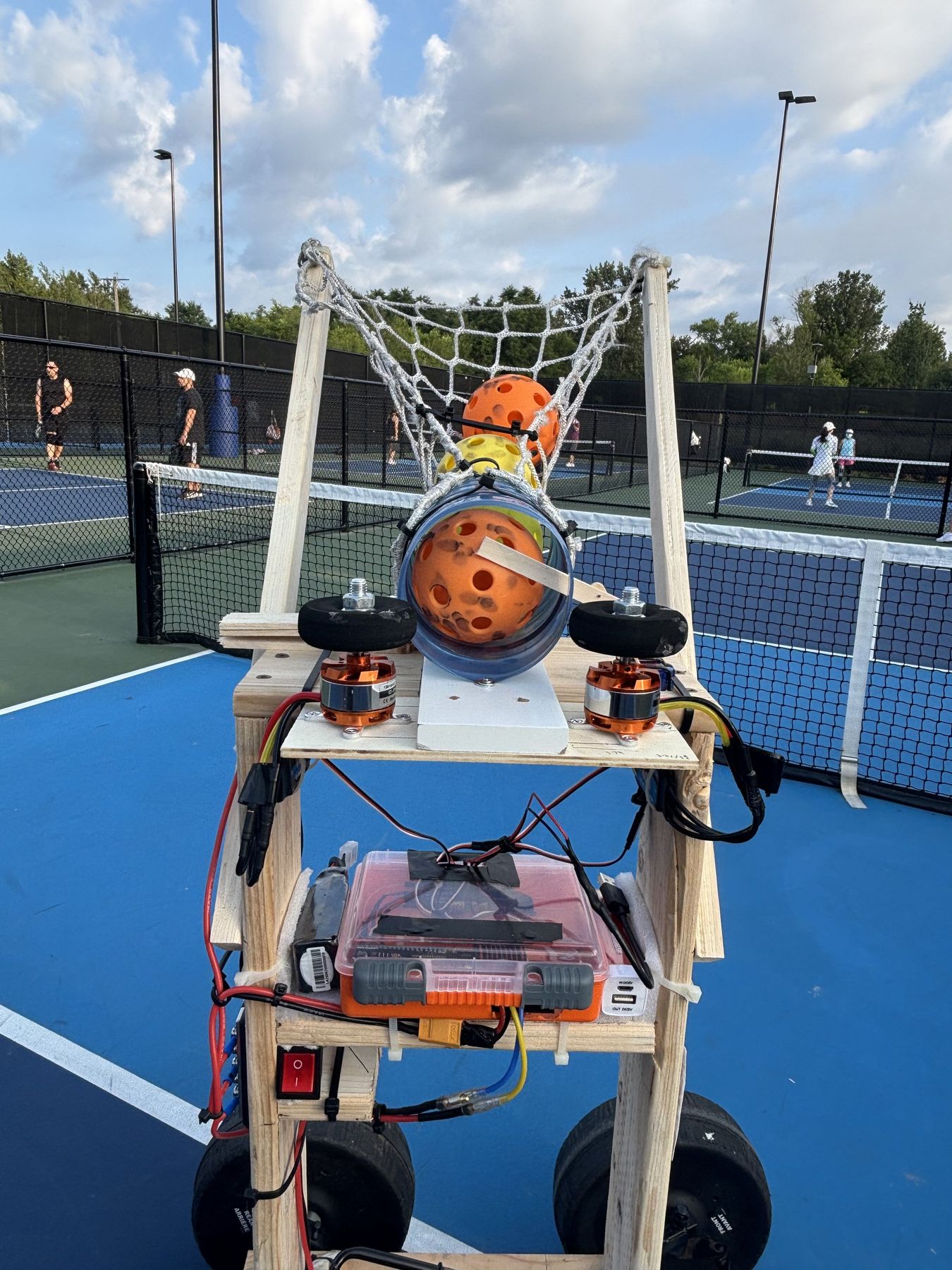
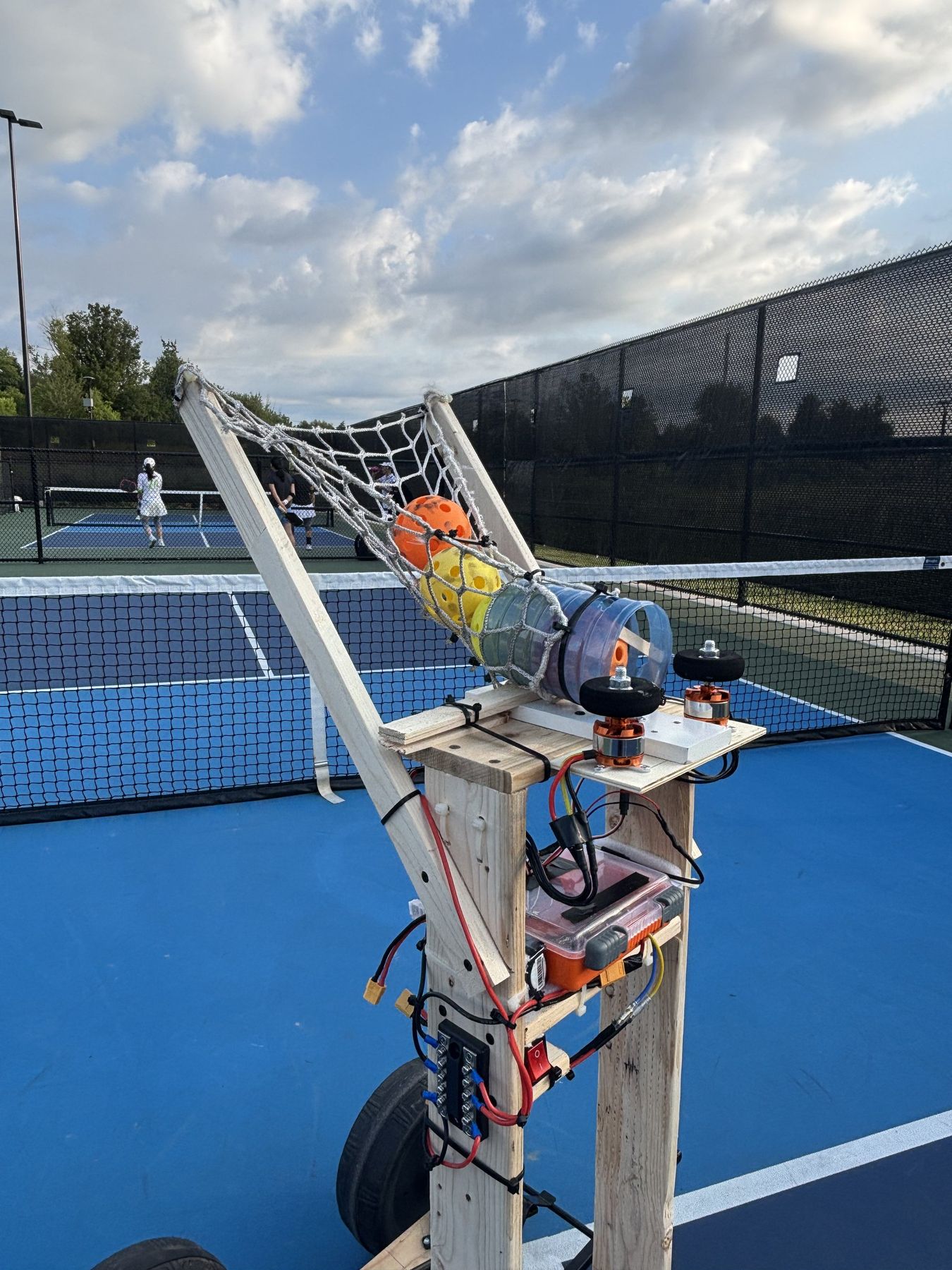
Designed a dual counter-rotating flywheel launcher mounted on a braced wood tower to fling a pickleball
Built a ball-storage net with a metering gate that feeds balls one at a time instead of trying to catch a live return
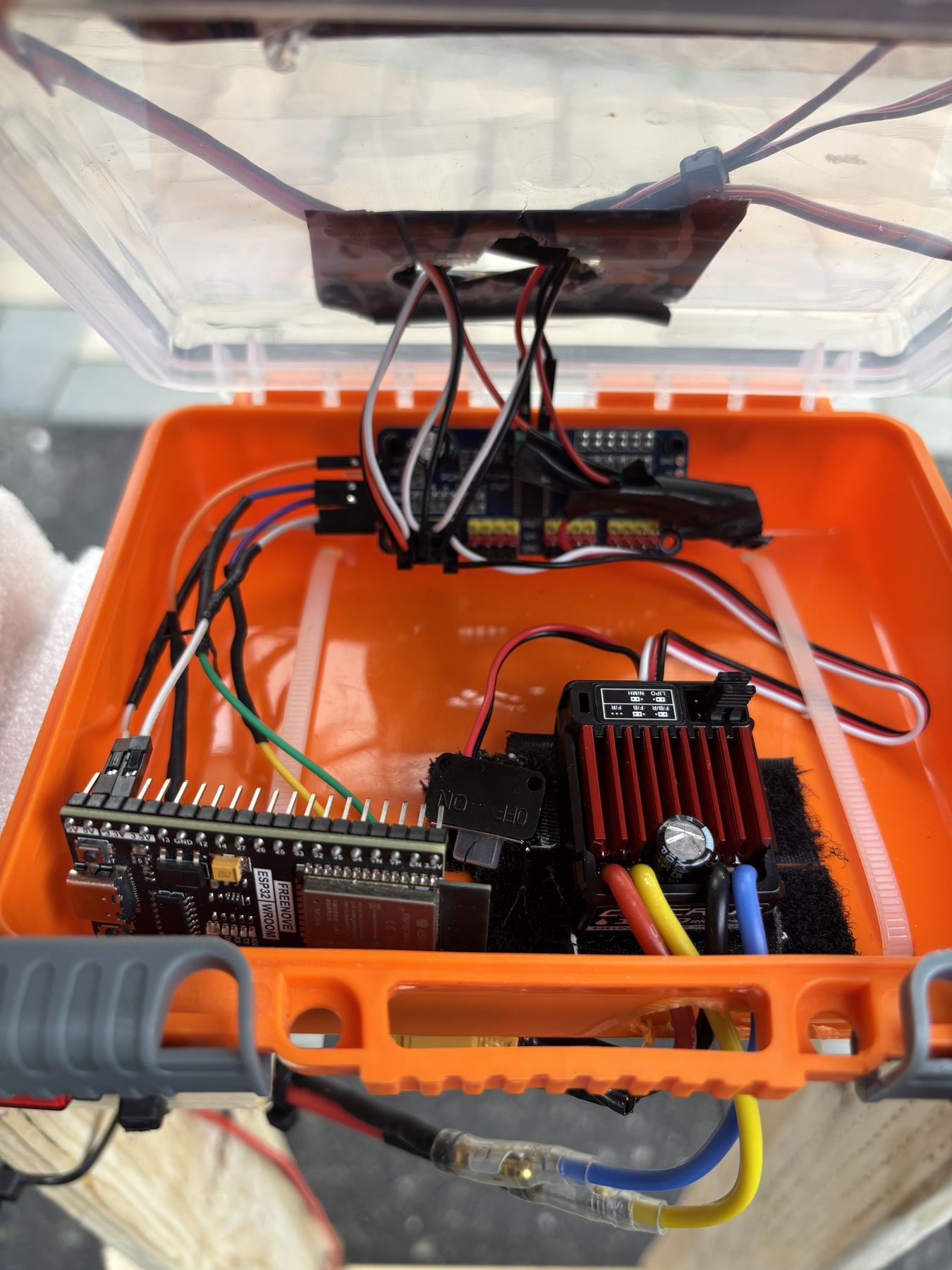
Hosted a self-contained WiFi control page directly from the ESP32 — a phone connects with zero internet or router
Rally Rover
Introduction
Built for Blueprint.io's Summer Build Contest, where it won 1st place: a gutted toy-car chassis rebuilt into an RC pickleball launcher. Dual counter-rotating brushless flywheels fling the ball while the buggy bursts forward on its own drive motors, controlled entirely from a phone over the ESP32's self-hosted WiFi network, no router or internet needed on court.
Date
August, 2026
ROLES
Builder
Designer
Functions
Dual Flywheel Launcher
Self-Hosted WiFi Control
What?
How?
Drove 2 brushless flywheel ESCs, a brushed drive ESC, and a gate servo through a PCA9685 PWM board over I2C
Split power into two isolated rails — a 3S LiPo for the motors, a separate 5V USB power bank for the ESP32 + PCA9685 — so motor current draw can never brown out the logic
Wrote a non-blocking state-machine firmware (train.ino) so the STOP button stays responsive with flywheels spinning and the buggy moving mid-run
Iterated through a full mechanical redesign after field-testing killed the original live-catch net concept, landing on the ball-storage gate instead
Results:
Won 1st place in Blueprint.io's Summer Build Contest — roughly $7.5k in prizes (Bambu Lab H2S printer, NVIDIA Jetson Orin Nano Super, provisional patent filing)
Fired a full magazine of pre-loaded balls autonomously, alternating drive direction each shot to sweep the court
Field-tested and tuned on a real pickleball court — flywheel power, drive burst, and gate timing all calibrated live
Built entirely from wood/foam fabrication and salvaged parts (bed frame, hockey net, RC-plane wheels) with zero 3D-printed structural parts