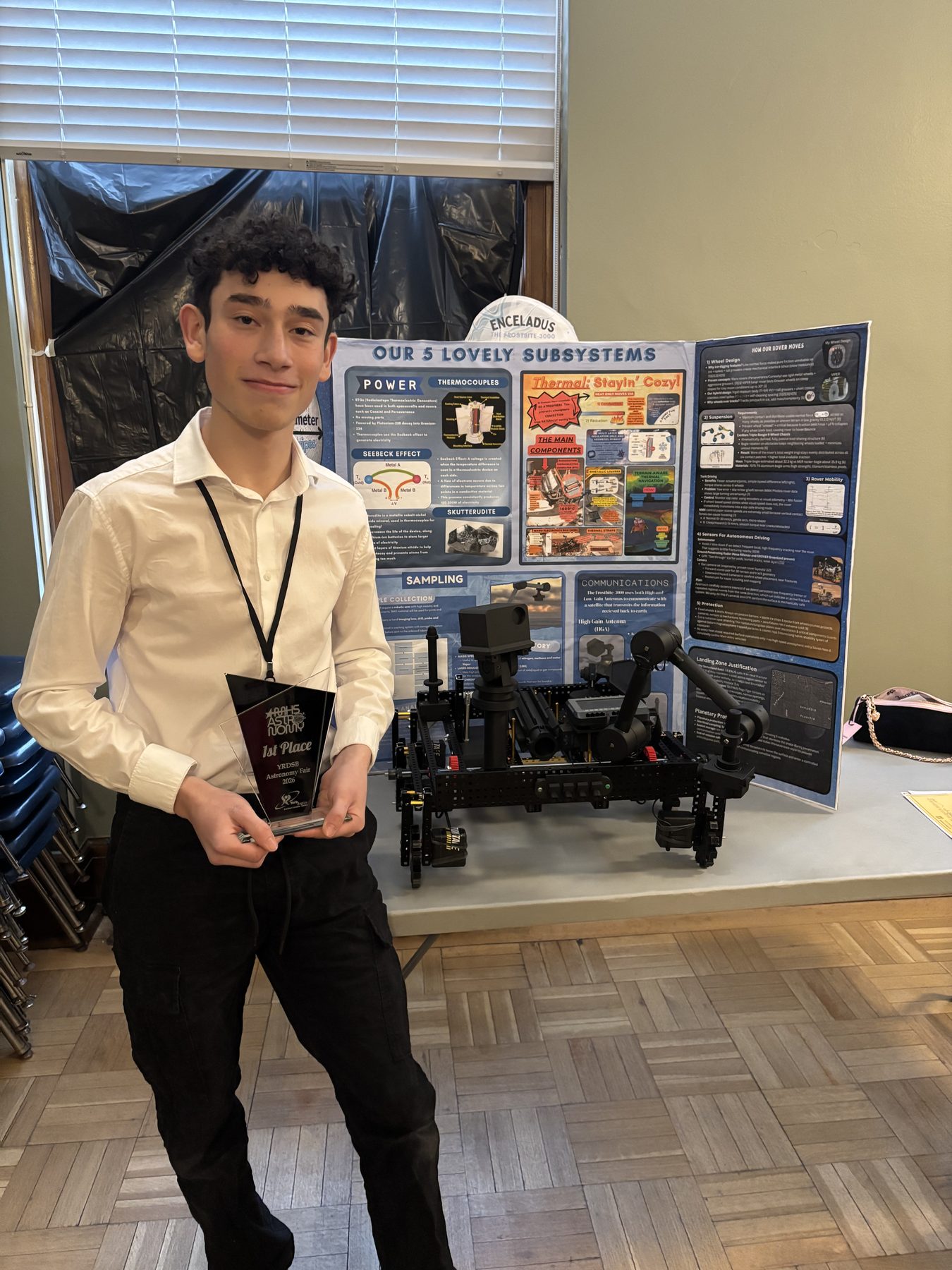
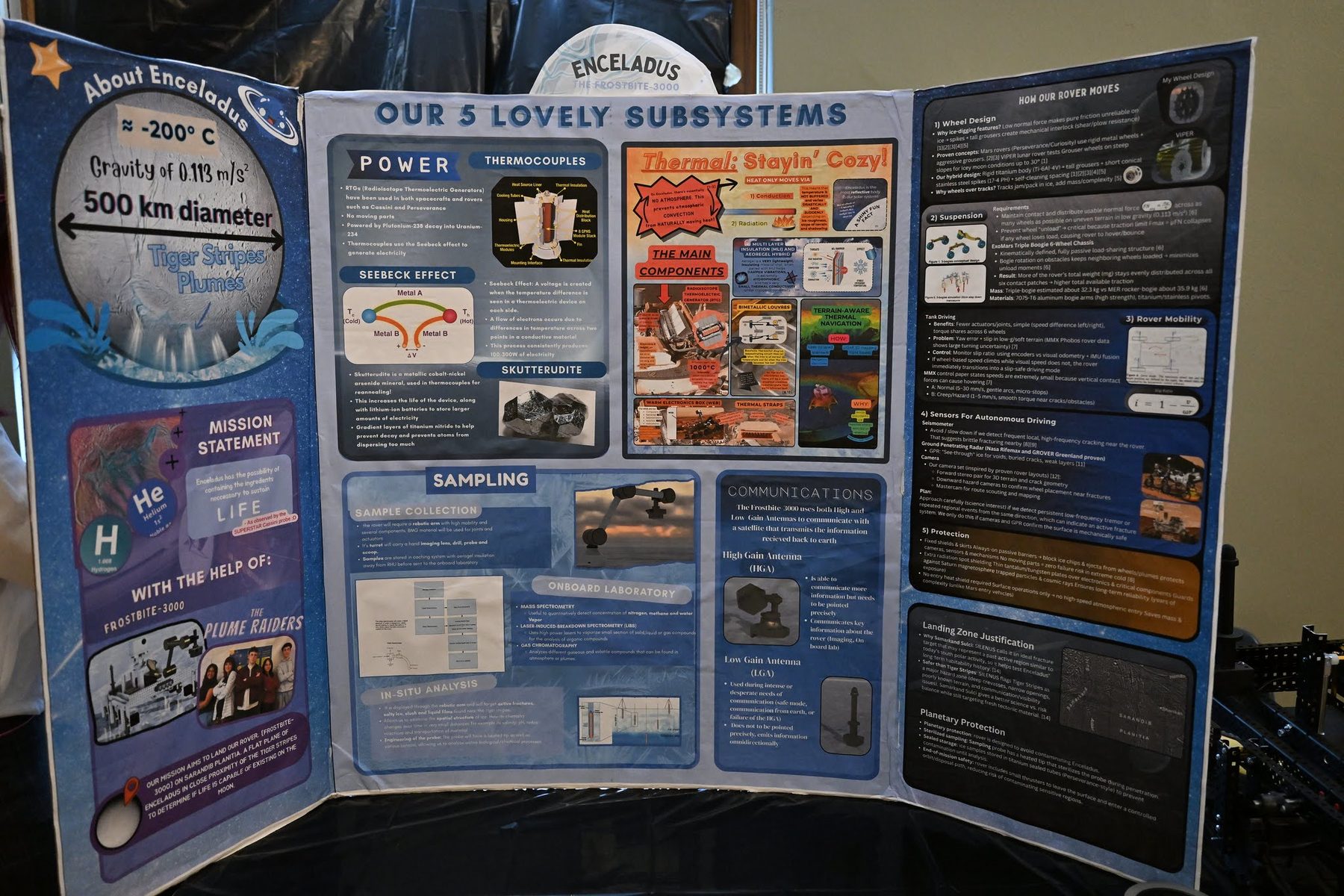
Designed a full rover mission across five subsystems: power, thermal, sampling, communications and mobility
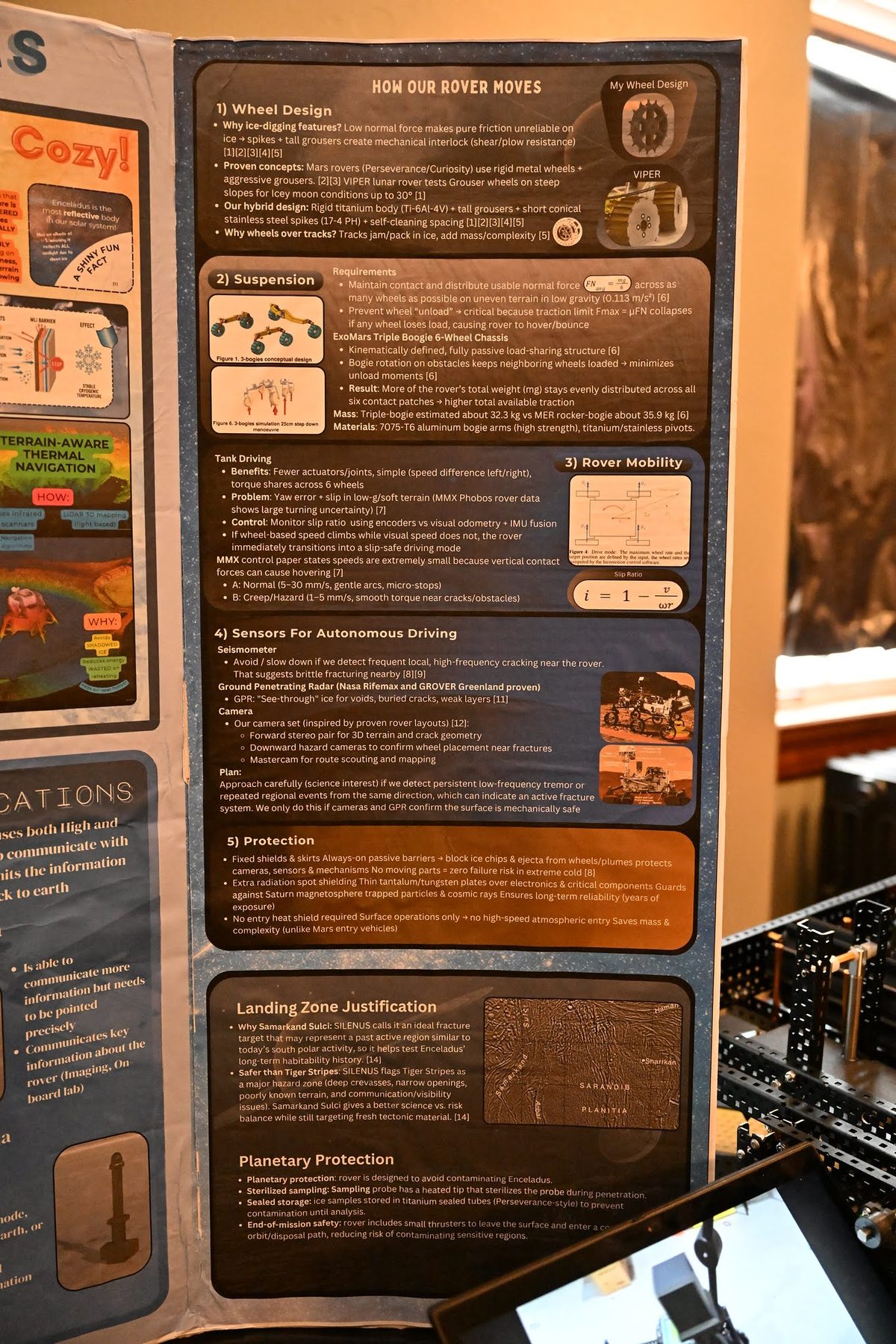
Led the team and owned the mobility and navigation design and the planetary protection research
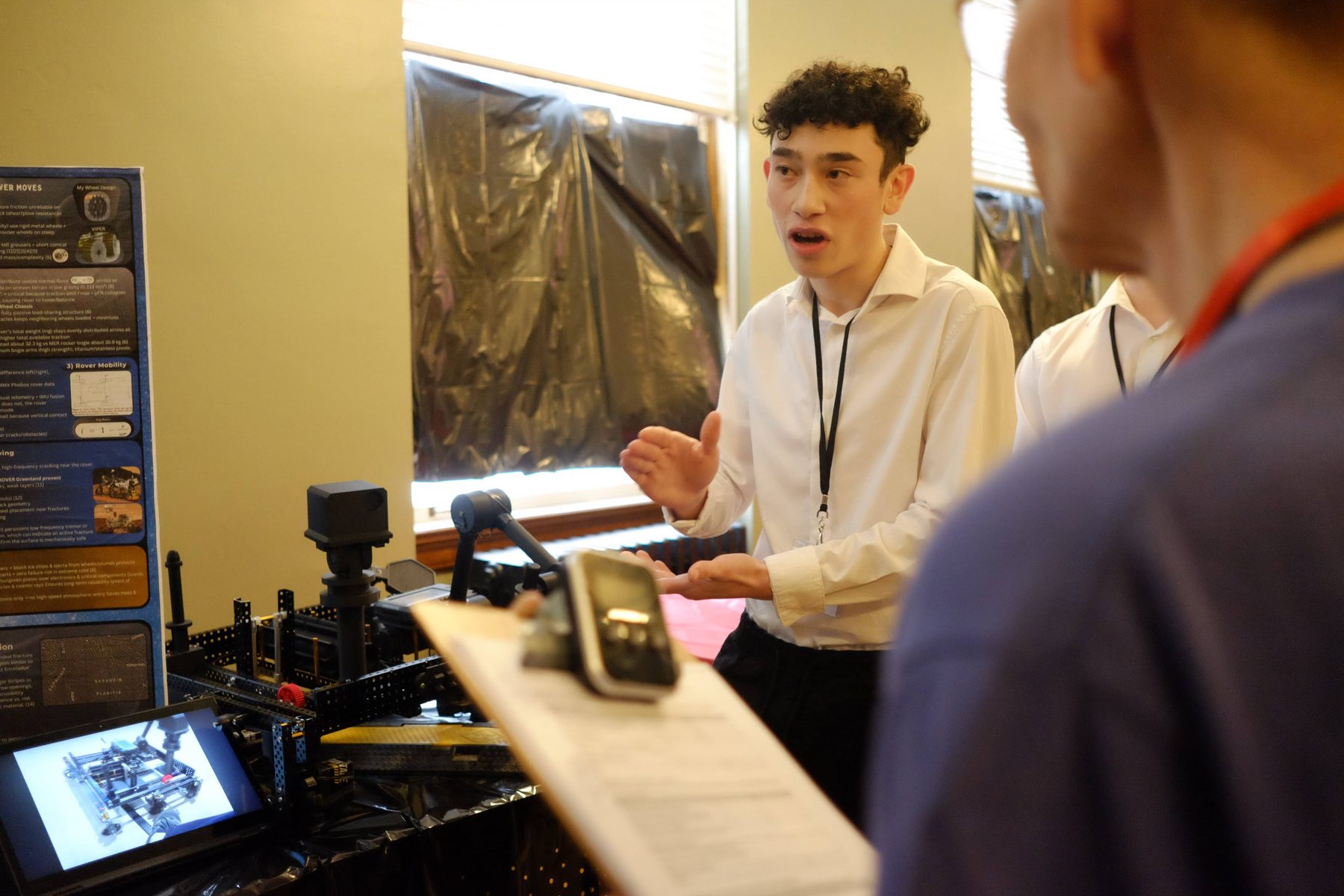
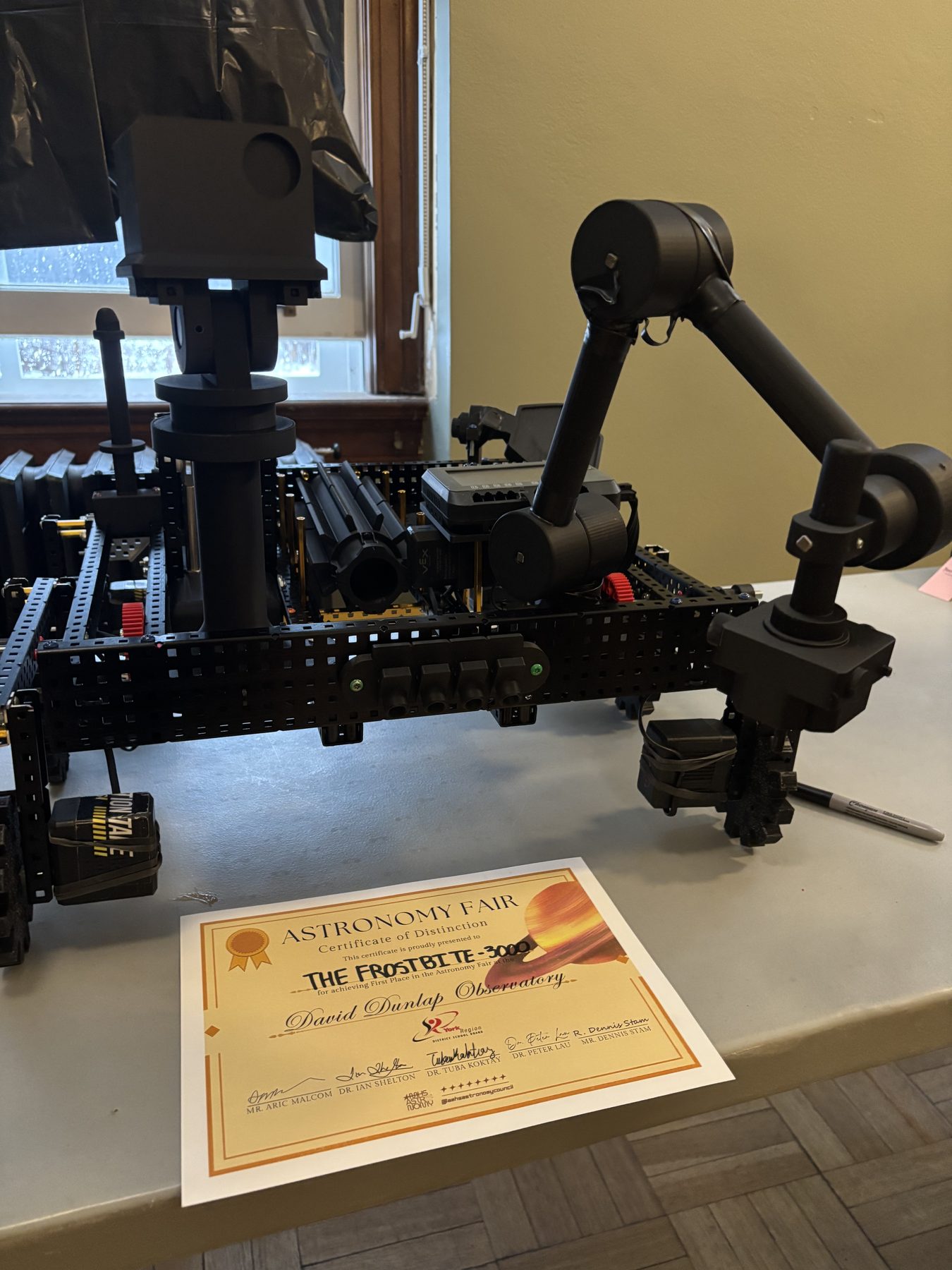
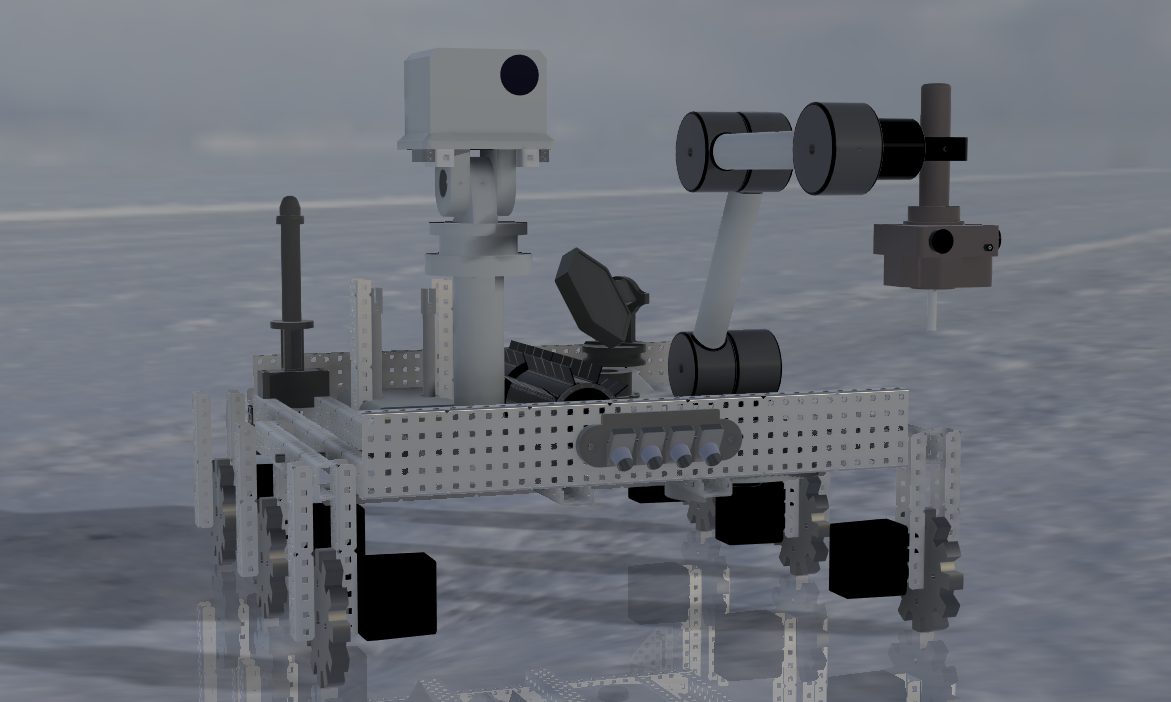
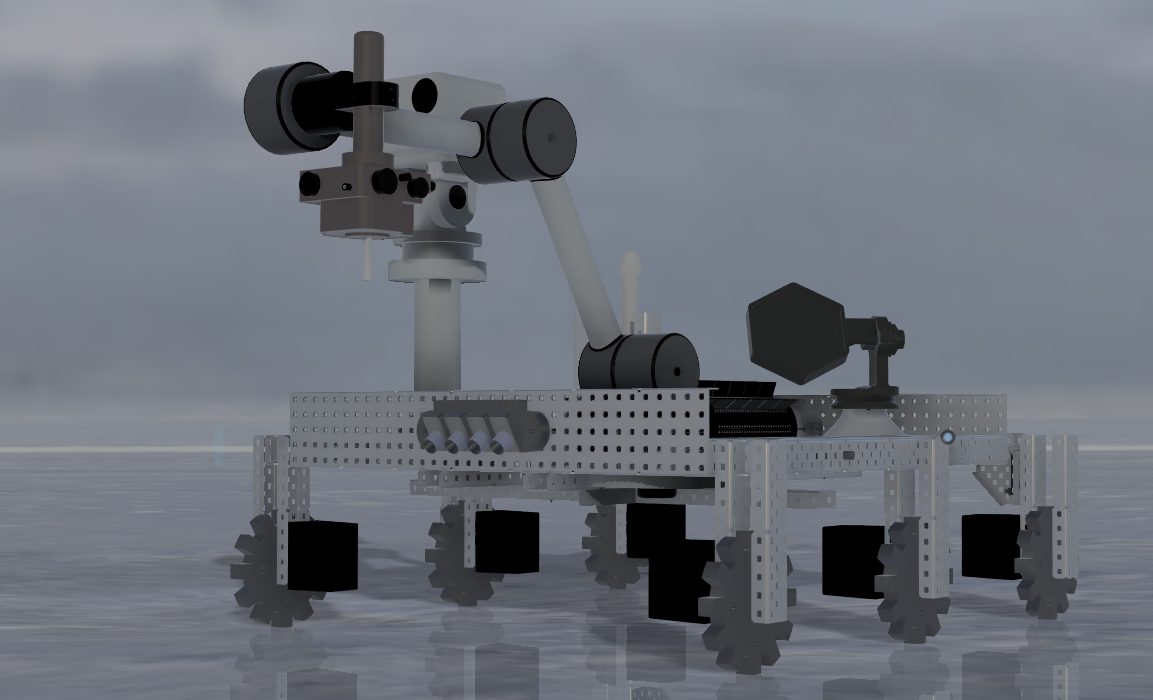
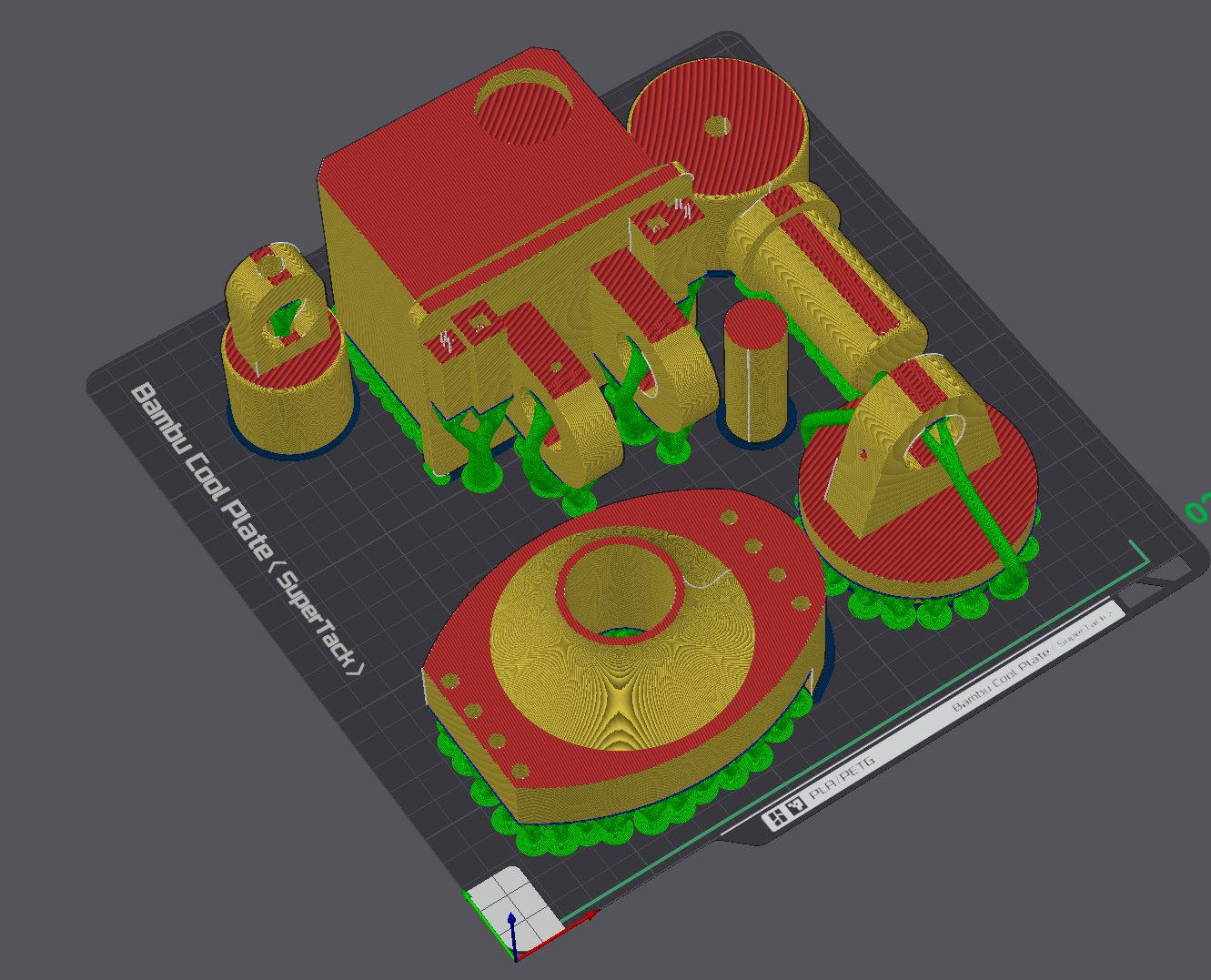
Built the physical rover model out of VEX parts, with a working robotic arm and sensor mast, after modeling it in CAD
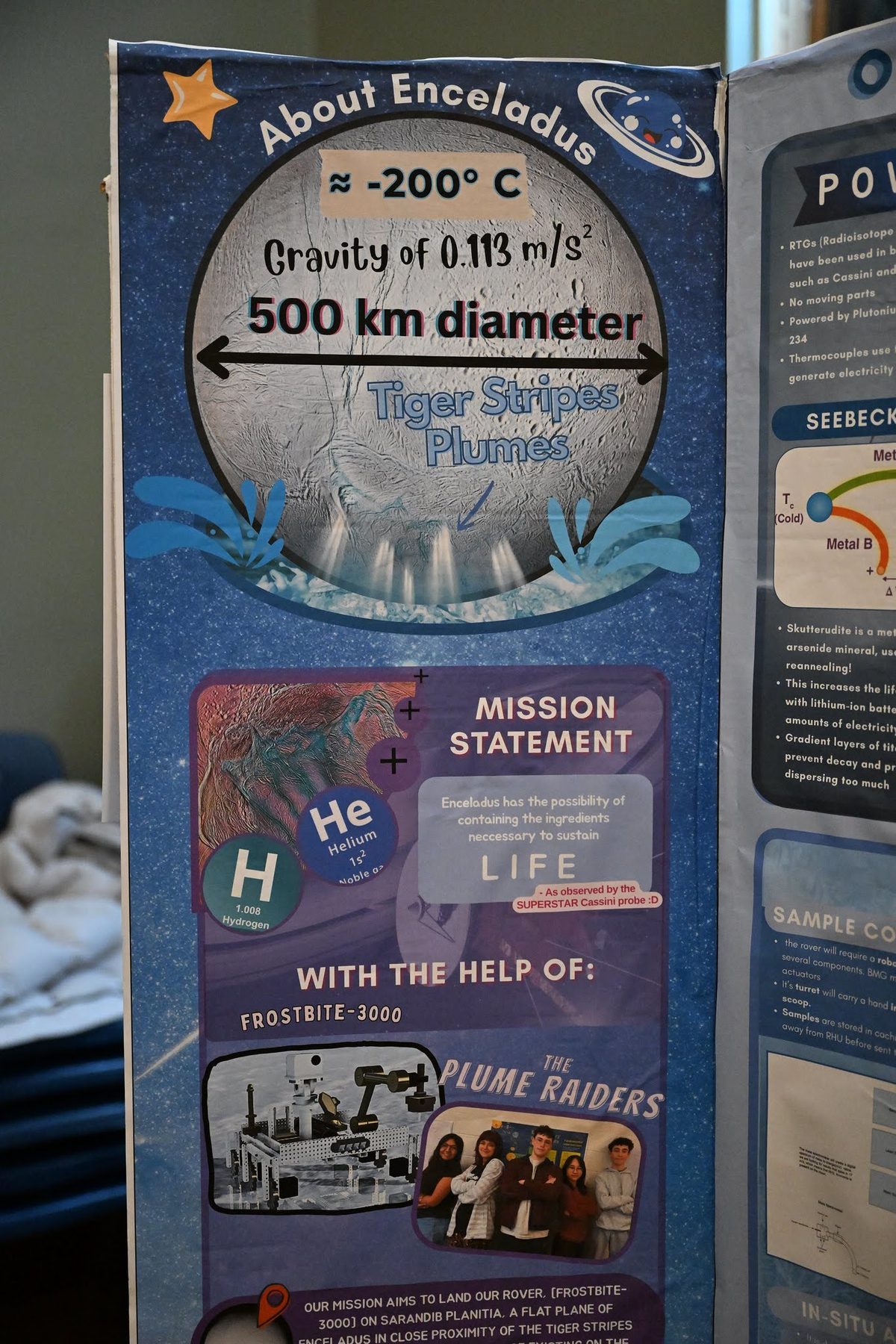
Picked a landing site on Sarandib Planitia, a flat plain close to the tiger-stripe plumes
Designed the whole bristle board in Canva at true scale and printed it as one seamless large-format sheet
Enceladus Rover
Introduction
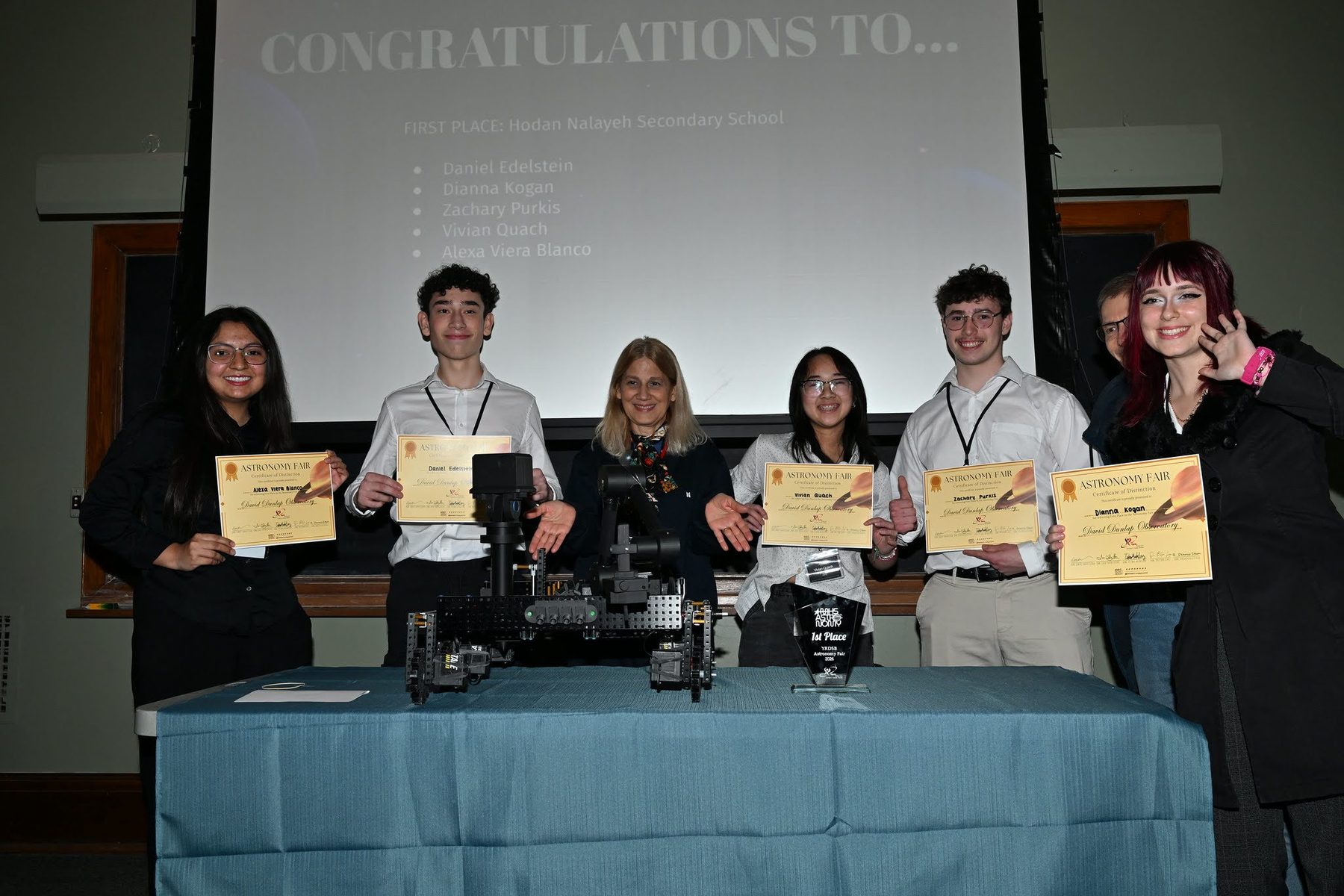
Our team, the Plume Raiders, designed Frostbite-3000, a rover mission to Enceladus, for the first-ever YRDSB Astronomy Fair at the David Dunlap Observatory. The challenge: land near the south-polar tiger stripes and collect ice grains, liquid water and plume gases at around -200 °C in 0.113 m/s² gravity. We placed 1st, scoring 45.6 out of 48.
Date
February, 2026
ROLES
Team Lead
Mobility & Navigation
Planetary Protection
Functions
Triple-Bogie Suspension
RTG Power System
What?
How?
Mobility (my subsystem): ran a trade study of NASA's rocker-bogie (Perseverance) against the triple-bogie chassis from ESA's ExoMars work, and picked triple-bogie: about 32.3 kg vs 35.9 kg for the same class of slope stability
The triple-bogie shares load passively: when one wheel climbs a rock, the bogie pivots so its neighbours stay planted, keeping normal force on all six wheels, and traction with it, in 0.113 m/s² gravity. Bogie arms in 7075-T6 aluminum
Power: an RTG using the Seebeck effect through thermocouples, with skutterudite thermoelectrics for efficiency and a longer generator life
Thermal: multi-layer insulation with an aerogel hybrid, bimetallic louvres, a warm electronics box and thermal straps, with materials chosen to survive about -200 °C
Sampling: a robotic arm turret (imaging lens, drill, probe, scoop) feeding an onboard lab: mass spectrometry, LIBS and gas chromatography
Planetary protection (my research): a heated ice probe that sterilizes itself as it penetrates, so the rover doesn't carry Earth microbes into the plume vents it's sampling
Comms: high-gain and low-gain antennas relaying through an orbiting satellite
Results:
View All Awards →1st place at the 2026 YRDSB Astronomy Fair, the board's first ever
Average judge score of 45.6 / 48 (standard deviation 1.67)
Backed every design choice with proven rover concepts and published research, then defended it in a 7-minute presentation and Q&A